2 October 2026
A Blanket for Someone You Have Not Met Yet
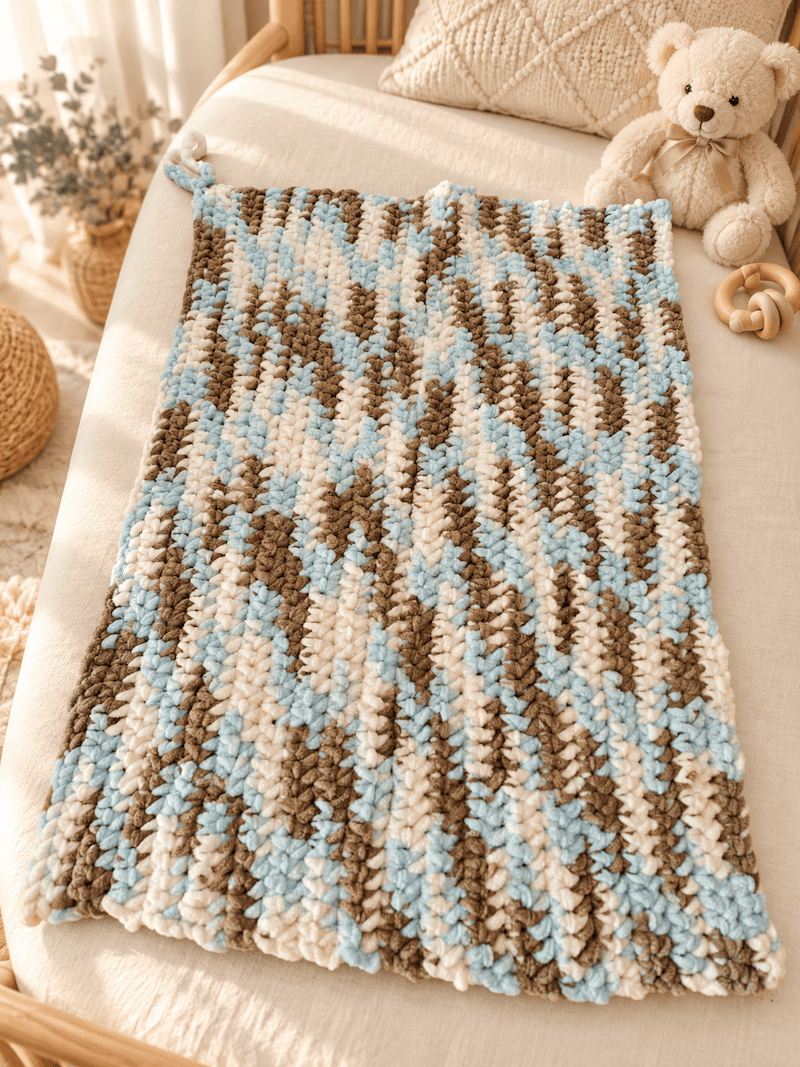
Two soft baby blankets, one in sky blue and cocoa, one in plum, teal and blush stripes. If you are expecting, this is how you can make one yourself in the months before your baby arrives, and why so many mothers-to-be tell us the stitching calms them as much as the blanket does.
There is a lot of waiting in pregnancy. Waiting for scans, waiting for kicks, waiting for the day itself. More and more of the expecting mothers who join our classes tell us they want something to do with their hands while they wait, something that ends with a thing they can hold.
A baby blanket is that thing. Here are two that show how simple, and how lovely, one can be.
Two blankets, nothing fancy

The first is worked in a plush, velvety yarn that changes colour by itself as you go: sky blue, cream and cocoa brown. You do not change colours at all. You just keep stitching, and the yarn makes the pattern, a soft zigzag of colour that looks far more planned than it is.
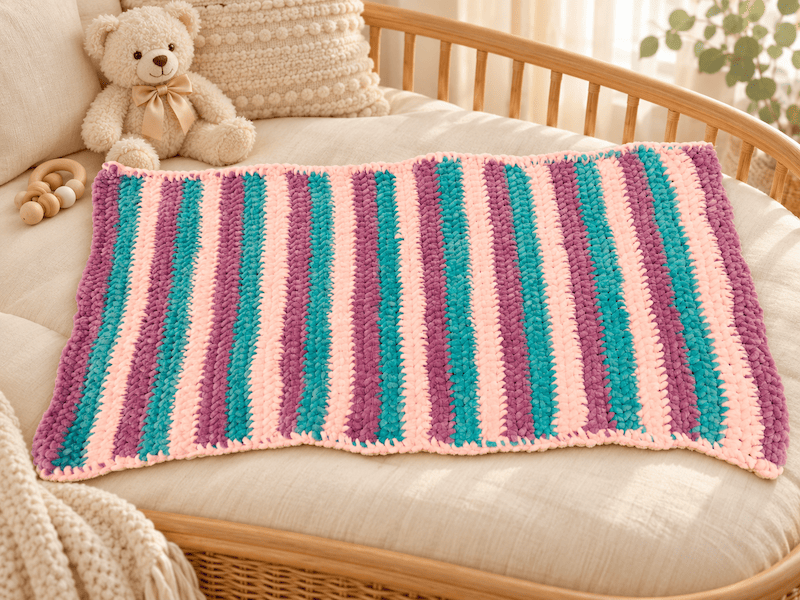
The second is all about stripes: plum, teal and blush pink, repeating across the whole blanket, with a blush border running round the edge to tie it together. Here you do change colour, but only at the end of a row, which is one of the first things we teach.
Look closely at both and you will see the same thing. No lace, no complicated stitches, no shaping. Just one simple stitch, row after row, in a yarn that is soft enough to make you want to keep touching it. That is the whole secret.
Why a blanket is the perfect first project
If you have never held a crochet hook before, a baby blanket is a better place to start than you might think:
- It is a rectangle. There is no shaping, no increasing, no decreasing. You work back and forth until it is big enough, then stop.
- It needs only one or two stitches. A single crochet or half double crochet is all either of these blankets needs. Once your hands learn the movement, it becomes automatic.
- Chunky yarn is forgiving. Thick, plush yarn grows quickly and hides small wobbles in tension. You see progress every single evening, which keeps you going.
- Mistakes do not show. A baby does not care if row 43 is a touch tighter than row 42. Neither will you, a year from now.
- There is a deadline, and it is a kind one. Most first-time students finish a baby blanket in a few weeks of relaxed evenings. You have months.
The calm in the counting
This is the part we did not expect when we started teaching expecting mothers, and it is the part they talk about most.
Crochet is rhythmic. Hook in, yarn over, pull through. Again. Again. After a few rows your hands find a steady pace and your breathing tends to follow it. Many crocheters describe the same feeling: the worries of the day go quiet, because there is just enough to pay attention to that there is no room left for anything else.
Here is what our students tell us they get from it:
- A pause in the day. Twenty minutes with the hook in the evening becomes a little ritual, a time that is theirs alone.
- Something for restless hands. For late nights when sleep will not come, a few rows on the sofa are gentler than scrolling.
- A sense of getting ready. So much of pregnancy happens to you. Making the blanket is something you do, for the baby, with your own hands. Every row feels like a small act of preparation.
- Time to think about the baby. Many mothers say they talk to their bump while they work, or pick the colours thinking about who this little person will be.
We are crochet teachers, not doctors, and crochet is no substitute for care from your midwife or doctor. If you are feeling anxious or low, please talk to them. But as a quiet, everyday habit, it is hard to think of a gentler one.
A skill that stays with you
The blanket is the beginning, not the end. Once you can crochet, you will find you have a skill you use again and again as your child grows:
- Small, fast makes like hats, booties and bibs, often finished in an evening.
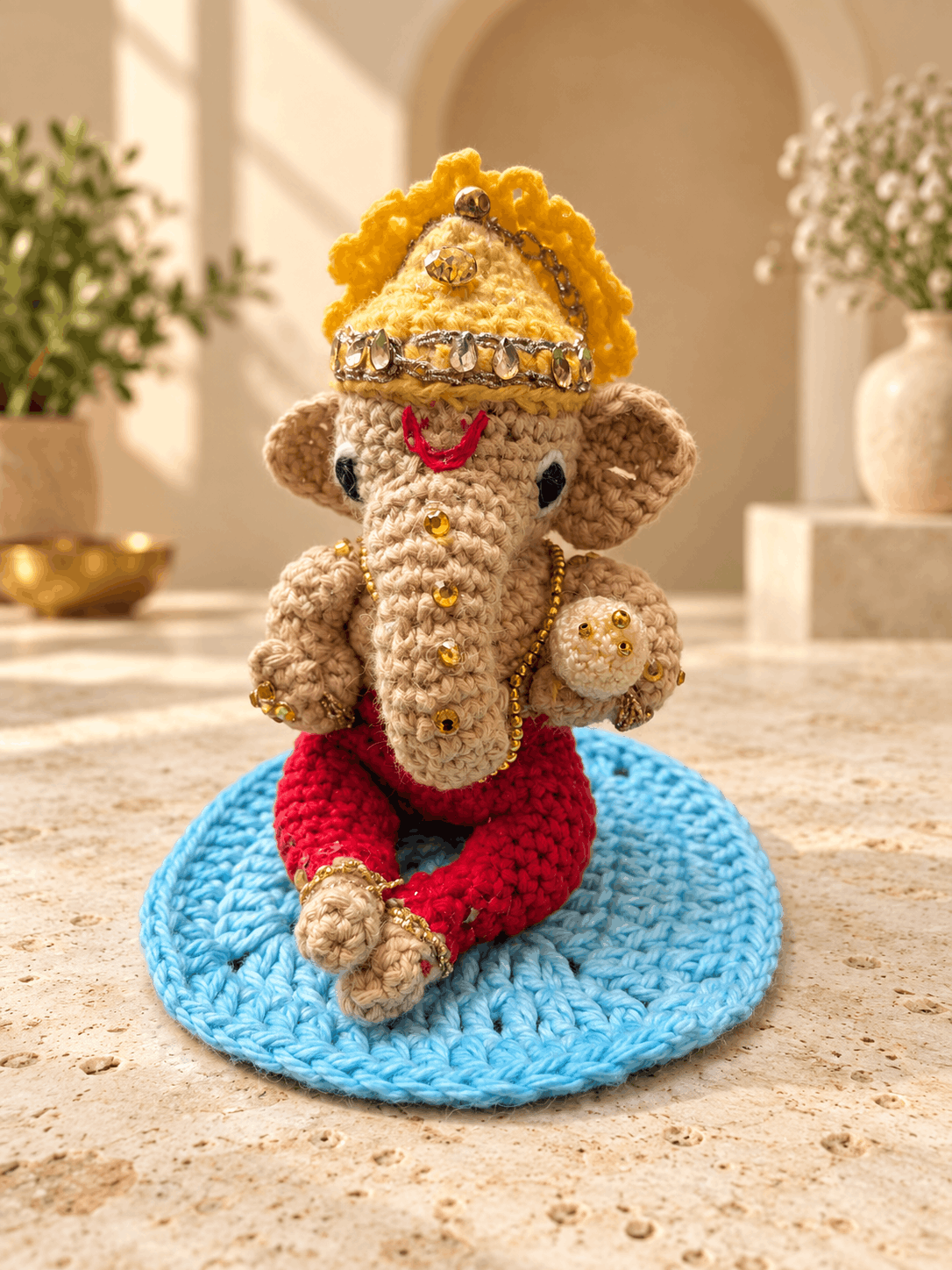
- Toys, once you are ready. Our baby elephant is a favourite second project.
- Mending and making do. A loose button loop, a hair tie, a soft cover for a teether.
- Something to share. Children love watching a hook move, and a few years from now you may find a small person asking to learn. Ours start as young as Saanvi.
And it is portable. A hook and a ball of yarn fit in a bag, which is useful in waiting rooms now, and useful during naptimes later.
A few things to keep in mind for babies
When you make something for a newborn, a little care goes a long way:
- Choose a soft, washable yarn. Baby blankets will be washed often. Look for yarn marked as machine washable, and wash the blanket before it is used.
- Keep it simple. Avoid buttons, beads, pompoms or long tassels that could come loose, and choose a close stitch over large lacy holes that catch little fingers.
- Weave your ends in well. Sew every loose end back through several stitches so nothing works free in the wash.
- Know where it belongs. Safe-sleep guidance recommends keeping loose blankets out of a young baby's cot. Your blanket is for cuddles, tummy time, the pram and the playmat, and it will be well used in all of them.
How to begin
You do not need to know anything to start. In your first class you will learn to hold the hook, make a chain and work your first row. By the end of the first month most students are well into their blanket, and the rest is just repeating what you already know, as many times as you like.
Pick colours that make you happy. Make it as big or as small as you want. And when your baby finally arrives, you will be able to wrap them in something you made while you were waiting to meet them. 💙
Expecting, and would like to learn? Register your interest — we welcome complete beginners, in person or online, and we will happily go at your pace.